First, a Primer: Why Authority Is the Ranking Factor That Matters Most
Before comparing tools like Semrush, you need to understand the single factor that separates the good tools from the great ones: authority.
Of all the factors that decide where a page ranks, authority is both the most important and the hardest to acquire. You can fix technical issues in an afternoon and rewrite content over a weekend, but authority — the weight of the backlinks pointing at your site — compounds slowly and costs real money or real time to build. No source directly measures Google's algorithm, so every tool approximates it. But the quality of that approximation varies wildly between tools, and choosing a tool with weak authority data is like navigating with a broken compass: every decision downstream inherits the error.
This is also why excellent research with good data reduces your burden so dramatically. If your data is accurate, you can find high-traffic keywords with genuinely low competition — keywords where the pages currently ranking are weak and beatable. Ranking for those keywords requires far fewer high-authority backlinks than attacking a term dominated by fortified, authoritative pages. Good data lets you spend your limited authority budget where it actually pays. Bad data sends you charging into SERPs you had no realistic chance of winning.
Keep that lens in mind as you read the reviews below, because it is the single biggest differentiator between the tools on this list.

Authority data quality is the single biggest differentiator between SEO tools — every decision you make downstream inherits its error.
How We Tested: Our Hands-On Criteria
This is not a feature-list roundup. We use these tools weekly for real client and internal projects, and we evaluated each one on the things that actually move rankings:
Authority data quality: We manually verified whether each tool's authority scores correlated with what we could observe about a site's real backlink profile — the closest proxy we have for how Google appears to measure authority.
Data freshness: How old is the data when you see it? A keyword that was low-competition three months ago may be a war zone today.
Keyword research quality: Can the tool reliably surface high-traffic, low-competition keywords? That is the entire job.
Price versus who you are: A solo entrepreneur, an agency, and a strategy consultant need very different things — and the right answer differs for each.
Our #1 pick, and it is not close — its authority rankings are vastly better than everything else on the market.
- Best-in-class authority data — the closest available proxy for how Google appears to measure site strength
- Trustworthy keyword difficulty — when it says a keyword is winnable, you can trust that read
- Fast backlink crawling with the industry's most complete link index
- Site Audit, Content Explorer, and rank tracking included
Ahrefs is our #1 pick, and it is not close. The reason is simple: its data is by far the highest quality in the industry — specifically, its authority rankings are vastly better than everything else on the market. In our own testing, Ahrefs' authority metrics behave very similarly to how we have observed Google appear to perform when measuring site strength. No tool directly measures Google's algorithm; Ahrefs is simply the best available alternative, and the gap between it and the competition is larger than most comparison posts admit.
When Ahrefs tells you a keyword is winnable, you can trust that read. When it tells you a competitor's page is strong, it is strong. That reliability is exactly what the authority primer above says matters most — and it is why Ahrefs earns the top spot for anyone whose primary goal is SEO.
The drawbacks are real, though:
It is extremely lagging. All of Ahrefs' data is roughly a month old. It crawls backlinks very quickly, but traffic data typically does not update quickly. If you need to know what happened last week, Ahrefs will tell you about last month.
It is very expensive. A single entrepreneur can get by on the ~$100/month Lite plan, but the free plan is generally too capped for real research — you will burn through its limits in a single research session. Agencies will require the $250+ plan, and at scale the costs climb from there.
A different tool wearing an SEO tool's clothes — near-real-time clickstream data that sees direct, social, and referral traffic pure SEO tools cannot.
- Near-real-time clickstream data from a network of real users
- Measures direct, social, and referral traffic — not just organic rankings
- Ideal for sizing markets and inferring competitor business performance
- Full marketing suite: ads, social, content, and PR tools included
Here is the uncomfortable truth most "Semrush alternatives" posts will not tell you: Semrush's data for SEO is vastly inferior to Ahrefs in our experience, and we do not recommend it for SEO. If ranking pages is the job, Semrush is the wrong tool — its authority metrics and backlink visibility simply do not hold up against Ahrefs when you verify them against real SERPs.
But Semrush is not useless — it is a different tool wearing an SEO tool's clothes. Semrush has much better near-real-time data because it has access to real clickstream data from a network of users. That means it can measure traffic beyond organic SEO: direct traffic, social traffic, referral patterns — the full picture of how a competitor's site actually gets visitors, not just how it ranks.
This makes Semrush far superior for business-casing type use cases, where the goal is to infer how a competitor's business is actually performing. If you are a strategy consultant sizing a market, evaluating an acquisition target, or stress-testing a competitor's growth story, Semrush's clickstream view answers questions Ahrefs structurally cannot. (Attention, strategy consultants: this is your tool.)
It is also extremely expensive — the Pro plan starts at $139.95/month and meaningful work happens on the $249.95 Guru tier and above.
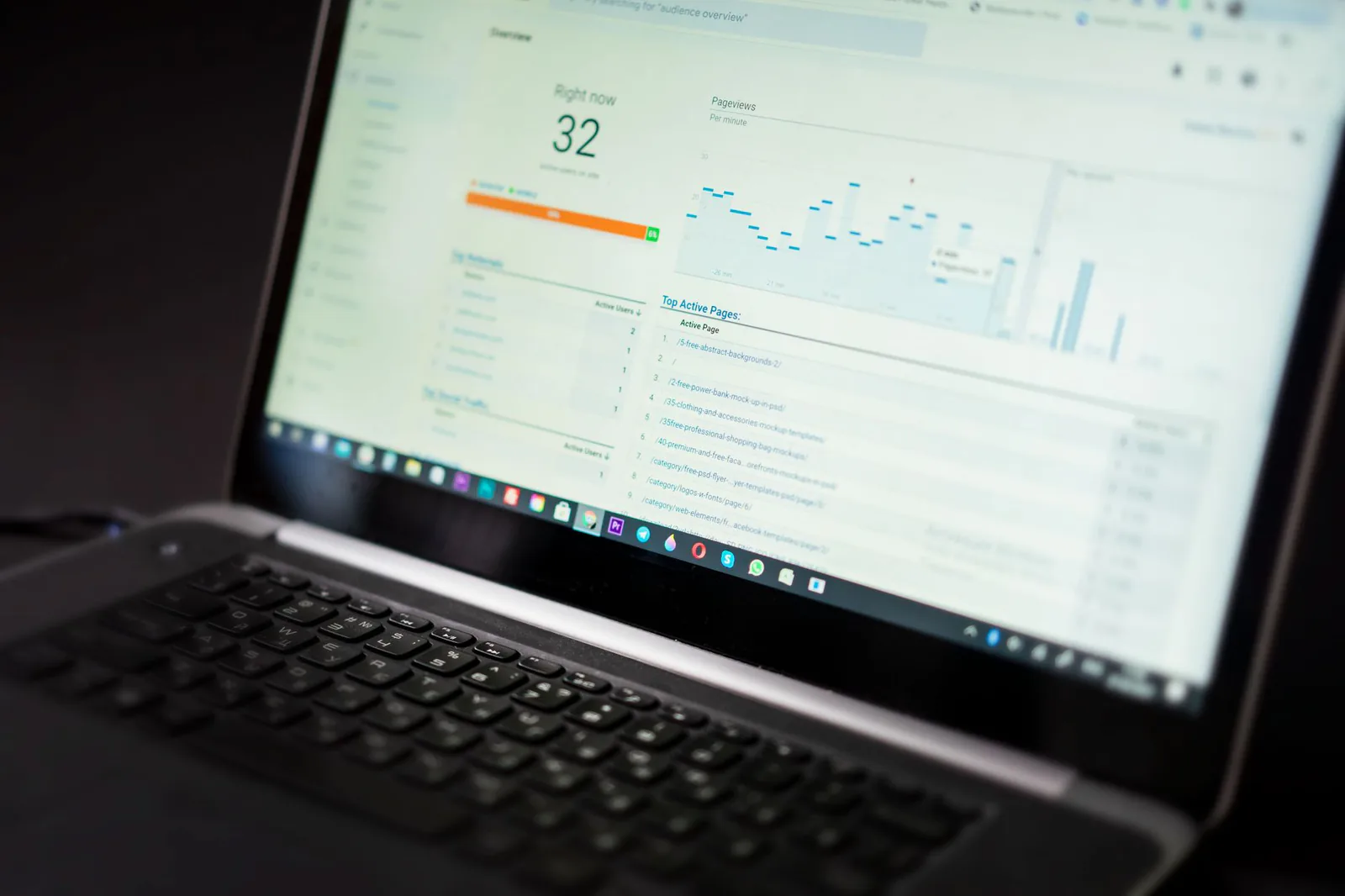
Semrush's clickstream panel captures direct, social, and referral traffic — the full picture of how a competitor's site actually gets visitors.
A raw data firehose for AI agents — hand it to Codex or Claude and let it cluster, filter, and cross-reference keywords at a scale no dashboard can match.
- Pay-as-you-go API pricing — meaningful volume for dollars per month
- Keyword difficulty and search volume data similar in quality to Ahrefs
- Perfect for programmatic keyword research through AI coding agents
- SERP, backlink, and on-page endpoints for custom tooling
We really like DataforSEO, though for a different reason than the two tools above. Because it is a very cheap API, it is absolutely excellent for dropping into Codex or Claude and letting it run wild with keyword research. Instead of clicking through a UI, you hand an AI agent a raw data firehose and let it cluster, filter, and cross-reference at a scale no human with a dashboard can match. For programmatic keyword research, nothing else on this list comes close on price-to-capability.
We cannot recommend it over Ahrefs, however. The critical failure is its authority score: in our experience, the DataforSEO authority score is practically useless. We have noticed virtually no correlation between what DataforSEO claims are high-authority sites and their actual backlink profiles when we go and manually verify them. Remember the primer — authority is the factor that matters most, and a tool that mismeasures it will steer your entire keyword strategy wrong.
The good news: DataforSEO's other data is similar to Ahrefs in quality. Its keyword difficulty scores and search volume data held up well in our verification. So the play is a hybrid one — use DataforSEO's cheap API to mine keywords at scale through AI agents, then validate the shortlist's competition levels in Ahrefs before you commit content resources.
Full Comparison Table
| Tool | Price | SEO Data Quality | Authority Data | Data Freshness | Best For |
|---|---|---|---|---|---|
| Ahrefs | ~$129/mo (agencies $250+) | Best in class | Vastly better than all others | ~1 month lagging | SEO — our #1 overall pick |
| Semrush | $139.95–$499.95/mo | Inferior for SEO | Weak | Near-real-time clickstream | Business casing, competitor total traffic |
| DataforSEO | Pay-as-you-go (very cheap) | Similar to Ahrefs (KD, volume) | Practically useless | Good | AI-agent keyword research via cheap API |
Pricing reflects list rates as of September 2026. Ahrefs and Semrush both offer annual discounts of roughly 15–20%.
A Warning: Skip the AEO / AI Recommendation Add-Ons (For Now)
A final note, because every tool above — Ahrefs included — now sells AEO add-ons that claim to measure whether AI chatbots recommend your product. Be highly skeptical of all of them for now.
These tools use the same methodology we have used in our own private testing: simulate the prompts users would ask a chatbot that would cause it to recommend products and services, then measure how often each brand appears. The problem is that their prompts are way too simplistic and not indicative of how users actually talk to chatbots.
Here is what we mean. For website builders, real users never typically ask ChatGPT "what's the best website builder." They start by asking how to create a business, and several conversations deep they branch into asking how to build a website. By that point, the chatbot is searching for very different terms than "what's the best website builder" — and the recommendations it makes are shaped by that entire conversation, not by a single category query.
Yet all of these services, Ahrefs included, base their AI recommendation scores on searches for exactly that: "what's the best website builder." We based our proprietary prompt testing on the wildcat data set specifically to use realistic, multi-turn prompts — and the gap between what these tools measure and how users actually behave is enormous.
Seeing as these add-ons cost hundreds to thousands of dollars a month and are not even measuring the correct thing, we wholeheartedly recommend not using them until the methodology improves. Revisit the category when vendors start modeling realistic conversation paths instead of single category queries.
Which Semrush Alternative Should You Pick?
If SEO is your goal: Ahrefs. Its authority data is the best available proxy for how Google appears to measure site strength, which makes every downstream decision — which keywords to target, which competitors to study — more accurate. Budget ~$100/month as a solo operator; plan for $250+/month at agency scale.
If business casing is your goal: Semrush. Its clickstream data sees direct, social, and referral traffic that SEO tools cannot, making it the better choice for inferring competitor business performance.
If you want maximum keyword research per dollar: DataforSEO's cheap API fed into Codex or Claude — then validate authority and competition in Ahrefs before committing.
If you want free: There are no strong Semrush free alternatives for serious research. Ahrefs' free plan and Semrush's limited free tier are useful for a quick look, but both are too capped for real work. Google Search Console remains the best genuinely free data source — for your own site only.
Our Top Pick: Ahrefs for Anyone Doing SEO
Among the Semrush competitors we tested, Ahrefs stands alone for SEO: its authority data is vastly better than everything else on the market and behaves most like how Google appears to measure site strength. Pair it with DataforSEO's cheap API for bulk keyword mining, and add Semrush only if you need clickstream-level business casing on competitors.